Built for seasonal volume
Series appointments, group procedures and self-booking bring hundreds of candidates through the selection in an orderly way.
Read moreTravel & hospitality
Hotels, tourism, service: flynne organises selection at the rhythm of the season, high volumes, short lead times, dependable workflows.
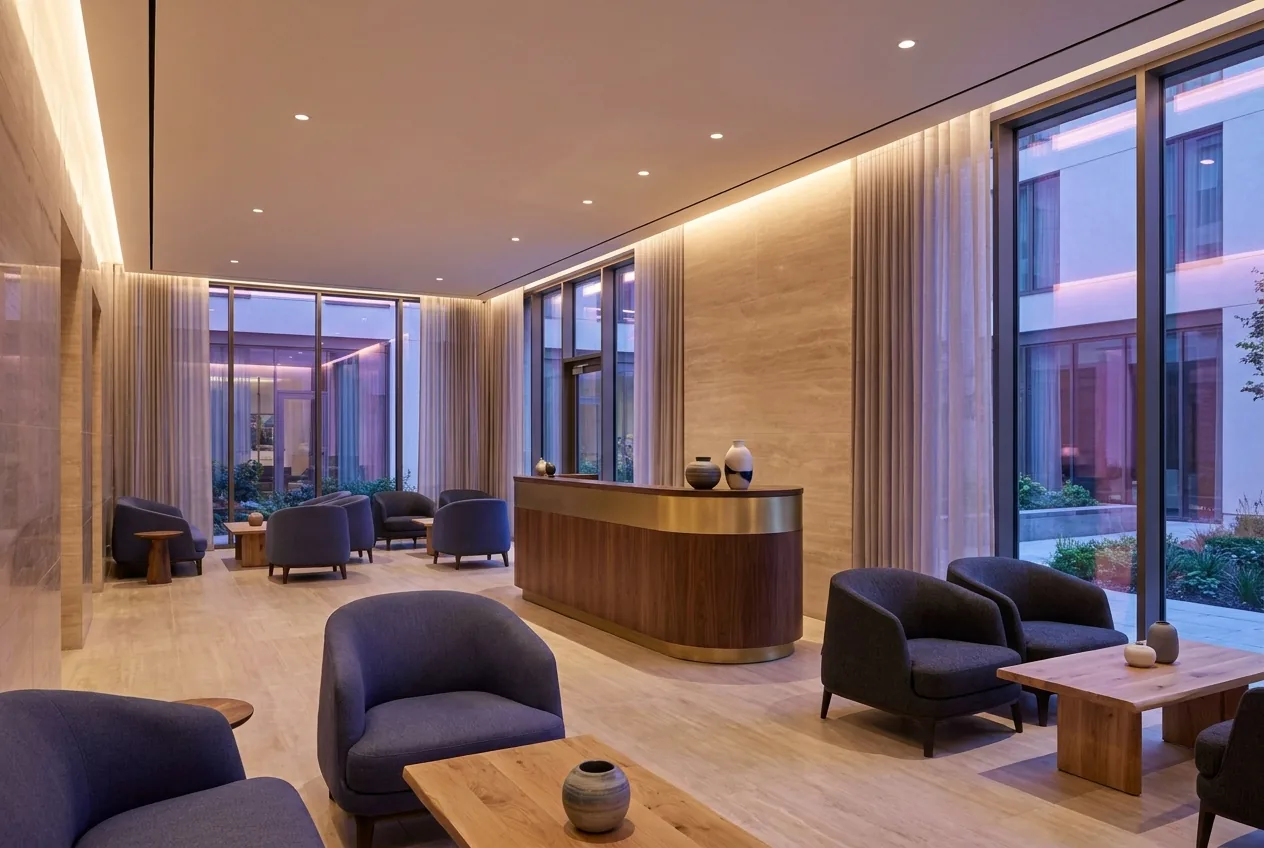
The start of the season does not wait: hundreds of positions within a few weeks, spread across properties, with high turnover. flynne organises assessment days at volume and keeps no-shows under control.
Series dates and group procedures move the volume in a structured way.
Kitchen and service places are resources too, and can be booked like rooms.
Run as their own stages with a repeat interval and a warning before they lapse.
House management sees its own procedures, head office sees the overview.
Series appointments, group procedures and self-booking bring hundreds of candidates through the selection in an orderly way.
Read morePunctual, friendly, reliable communication: your selection process shows the hospitality you sell.
Read moreTwo peaks with quiet in between. What works in normal operation collapses before the season.
Before the winter season
Many posts in a few weeks, often for several houses at the same time.
Before the summer season
The same wave again, with the same templates and pre-planned windows.
During the peak
Replacement hiring next to operations. Assessors come off duty, rest periods count.
Off season
The apprentice intake and management posts, planned backwards from the start of training.
Every role brings its own rules, its own participants and a bottleneck of its own.
Seasonal staff
Two peaks a year with quiet in between: before the season many positions have to be filled within a few weeks, often for several properties at once. A procedure that works in normal operations breaks down here; what is needed is throughput at constant quality.
Hotel and kitchen apprentices
The procedures include practical parts and therefore need the kitchen or the service floor as their setting, not just a meeting room. And they have to be finished before training starts, while the business is in high season.
Service with guest contact
Friendliness under pressure cannot be asked about, only observed. Such procedures need situations rather than questions, and assessors from the operation who are rarely free at the same time.
Kitchen and property management
Leadership with high turnover and thin staffing. What counts is how someone handles absence and conflict: things that are easy to claim in a conversation and quickly visible in the operation. Hence observation rather than self-report.
International staff
Recognition, language certificates and visas run in parallel and take months. The procedure has to bridge that waiting time without losing contact, and be able to show the status at any moment.
IfSG § 43: instruction before the first shift
Anyone handling food needs an instruction before starting work, repeated at fixed intervals. flynne carries it as a stage of the procedure: if it is missing, the start is blocked automatically instead of surfacing during onboarding.
JArbSchG § 32: initial medical examination
In hospitality many applicants are under eighteen. Then separate rules on working hours apply, plus a medical examination before employment begins, both with consequences for the scheduling of the procedure itself.
Working hours act
Sunday and public holiday work, rest periods, maximum working hours: anyone using assessors from the live operation has to observe them. flynne takes rest periods into account when scheduling rather than checking them afterwards.
Vocational training act
Training contracts and registration with the chamber follow fixed deadlines. flynne plans the procedures backwards from the start of training and shows which places are still open.
DIN 33430 and the EU AI Act
Structure and speed are not a contradiction: that is exactly why the standard describes procedures you prepare rather than reinvent each time. Anyone hiring two hundred people before the season gains time that way instead of losing it. The EU AI Act makes sure the decision stays with people; in flynne it is built that way.
Through procedure templates and pre-planned date windows: a template procedure is multiplied instead of every appointment being agreed individually. Candidates book themselves, reminders run automatically, and the day overview shows where throughput is stuck: on rooms, on assessors or on replies that never came.
Rooms and resources are stored with their properties, kitchen and service places included. Scheduling only books what fits the type of procedure, and shows conflicts while planning.
Yes, as a stage of its own with a status and a repeat deadline. flynne does not carry it out, but it records whether it exists and warns before expiry.
Permissions can be granted per property and role: property management sees its own procedures, head office sees the overview. Sites can be reported separately and compared across all of them nonetheless.
Tell us briefly how you run assessments today and we will show you in 30 minutes how flynne helps.
We reply within one working day.